
The Stories We Carry.
The Traditions We Share.
A favorite dish prepared from memory. A photograph that brings back a familiar laugh. A story passed down so children can know someone they never had the chance to meet.
Observed on November 1 and 2, Día de Muertos is a Mexican tradition that honors loved ones who have passed away. Through ofrendas, flowers, food, and storytelling, families preserve memories and strengthen connections across generations.
At Vision Communities Management (VCM), we recognize that welcoming communities grow through understanding the people who call them home. Learning about Día de Muertos traditions offers an opportunity to appreciate the family histories and cultural practices that give our neighborhoods their character.
Día de Muertos Traditions and Their Meaning
Día de Muertos brings families together to remember those who came before them. Its traditions combine Indigenous Mexican practices with Catholic observances associated with All Saints’ Day and All Souls’ Day.
Customs vary across regions, communities, and households. Some families prepare an altar at home, visit and decorate graves, gather for a meal, or share stories about the people they are honoring.
The occasion makes room for both the sadness of loss and the warmth of remembering a life. A familiar recipe or a favorite song can become a way to keep someone’s presence meaningful for another generation.
The Ofrenda: A Family’s Story
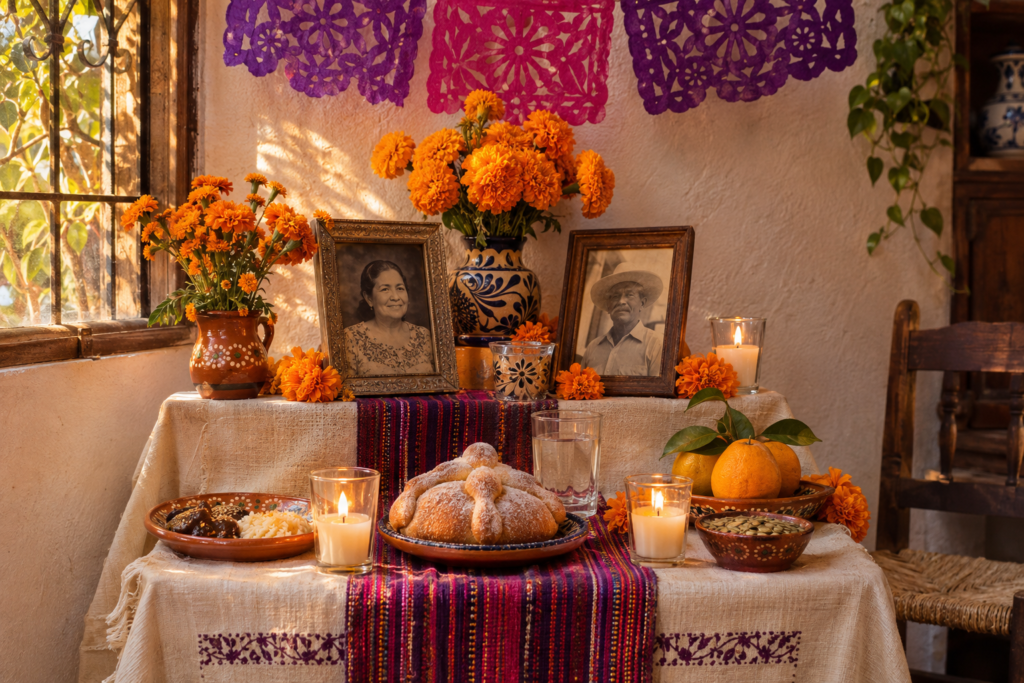 At the heart of many Día de Muertos celebrations is the ofrenda, an altar prepared with offerings for loved ones who have passed away. Each arrangement reflects the people being remembered and the traditions of the family preparing it.
Photographs identify those being honored. Candles offer light, while orange marigolds, known as cempasúchil, are traditionally associated with guiding returning souls through their color and fragrance. Water, favorite foods, and personal belongings make the offering deeply individual.
Pan de muerto, a traditional bread prepared for the occasion, often appears alongside these offerings. Papel picado adds delicate patterns and color, with designs and arrangements that differ from one celebration to another.
An ofrenda’s meaning comes from these personal details: a cup of someone’s favorite coffee, a treasured keepsake, or a dish prepared the way a grandparent taught it. Together, they tell a story that extends beyond the photograph.
How Cultural Understanding Connects Neighbors
Across Texas, neighborhoods bring together people with different backgrounds, family histories, and traditions. Understanding the meaning behind a neighbor’s observance can create a connection that a passing greeting may never reach.
For HOA boards and community leaders, cultural awareness begins with listening. When residents choose to share a tradition, a welcoming community gives them space to explain its significance in their own words.
A conversation about an ofrenda, a shared family recipe, or a story about a loved one can help neighbors know one another more personally. Participation should always be voluntary, with respect for the different ways people experience remembrance and loss.
These everyday exchanges support the relationships that make a neighborhood feel like home.
Keeping Memories Present Across Generations
When a child asks about a photograph or learns to prepare a family recipe, remembrance becomes a shared experience. Stories help younger generations understand where they come from and introduce them to people whose influence continues long after their lives.
Día de Muertos offers a meaningful setting for these conversations. Its traditions remind us that preserving a memory can be an active expression of care, carried forward through the things we make, teach, and share.
At VCM, we honor the families observing Día de Muertos and the memories they are preserving. Our approach to community management recognizes the importance of the relationships, experiences, and traditions that shape life within a neighborhood.
Because the stories we carry also become part of the communities we call home.
Learn more about Vision Communities Management and our approach to community living.